A brand spends a big budget on a campaign made for Lagos, Nairobi, or Johannesburg, then casts a non-native voice or whoever was cheapest on a freelance marketplace. The read comes back technically correct and completely flat. Nobody in the target audience feels spoken to. This happens more often than most marketing teams would like to admit, and it’s exactly the gap an African voiceover artist is built to close.
What makes a voice “African”? Is it the accent, the language, the passport, or something deeper?
As an award-winning African voiceover artist who has worked with global brands, I have seen firsthand what separates authentic voice casting from generic reads. More brands are realising that when it comes to connecting with African audiences, authenticity isn’t a nice-to-have; it’s a competitive advantage.
So what exactly is an African voiceover artist, and why does hiring the right one matter? Here’s what every brand should know before hiring an African voiceover artist.
What is an African Voiceover Artist?
An African voiceover artist is a professional voice actor from Africa who brings authentic accents, cultural fluency, and lived experience to commercials, promos, corporate narration, e-learning, animation, character work and voiceovers, rather than approximating an African sound from the outside. The distinction matters because audiences can tell the difference between a voice that understands the culture and one that is merely imitating it, and that gap shows up directly in how a campaign performs.
This isn’t about accent alone. A skilled African voiceover artist reads the emotional register of a market correctly: when a script calls for warmth versus urgency, when a Pidgin inflection lands naturally versus when neutral English is the better call, when a joke will travel and when it won’t. That judgment comes from having lived inside the culture.
Africa is not one accent either. A Nigerian voiceover artist, a South African voice actor, and an East African narrator each bring distinct cadence, rhythm, and reference points. Brands that treat “African voice” as a single interchangeable category tend to get generic results even when they’ve technically hired local talent. Matching the right regional voice to the right market is part of the job.
Why Brands Are Moving Away from Generic Reads
Global campaigns used to default to a neutral, often American or British-accented voice for African markets, on the assumption that “neutral” travels better. That assumption is breaking down. Streaming platforms, fintech apps, and NGOs working across the continent have learned that a voice audiences recognize as their own builds trust faster than a voice that sounds imported.
There’s also a production-quality piece that gets underestimated. International brands sourcing African talent used to accept a real trade-off: authentic accent, but home-studio audio that wasn’t broadcast-ready. That trade-off has mostly disappeared. A professional African voiceover artist working today typically has a proper acoustic setup and remote session capability through platforms like Source Connect, ipDTL, and Zoom, which means a brand in New York or London can direct a live session in Lagos with the same audio standard they’d expect from a studio down the street.
What to Look For When Hiring One
Not every voice with an African accent is production-ready for a global brand. Awards and agency logos are useful signals, but they don’t tell you whether a session will actually run smoothly. These are the things that matter once you’re in production:
The right voice, accent, and range for the brief.
This sounds obvious, but it’s the most skipped step. A warm, conversational tone that sells skincare won’t necessarily carry the authority a financial services explainer needs. Listen for range across formats, not just a single polished demo, and confirm the specific accent (Nigerian, West African, South African, East African, neutral Pan-African) actually matches your target market rather than just sounding “African enough” to an outside ear.
Direction and adaptability, not just a good demo.
A great demo reel proves someone can nail a pre-written script on their own time. It doesn’t prove they can take live direction, adjust a read three different ways in one session, or match a tone reference you send mid-call. Ask about live-directed session experience specifically, and if possible, book a short paid test session before committing to a full campaign.
Clarity on usage rights and licensing.
Voiceover pricing isn’t just about the session rate. It depends on where the audio runs (broadcast, web-only, internal use), for how long, and in which territories. A professional will ask these questions before quoting, not after delivery. Get usage terms in writing before the session, not after you’ve already paid.
Turnaround time and time zone overlap.
If your team is in New York or London and your talent is in Lagos or Nairobi, for example, figure out the realistic overlap window for live direction and how fast revisions come back outside of it. A seven-hour time difference isn’t a dealbreaker, but it needs to be planned for, not discovered on a deadline.
File delivery standards.
Ask what format you’ll receive: raw unprocessed WAV alongside a mastered version, correct sample rate and bit depth for your platform, and clean file naming if you’re ordering multiple takes or languages. Anyone doing this professionally will have a standard delivery checklist already.
Native-level fluency in the specific language or dialect you need.
Not just a general “African accent.” If the script involves Pidgin, Yoruba, Swahili, or another local language alongside English, confirm the talent is a native or near-native speaker of that specific language, not simply comfortable performing it phonetically. A native speaker will also catch script errors a foreign writer might miss.
Revision policy and contract clarity.
How many rounds of revisions are included before extra charges apply? What happens if the brief changes mid-project? Is there a written agreement covering payment terms, cancellation, and delivery deadlines? Get this settled before the first session, not during a rushed re-record.
Confidentiality readiness.
If the campaign is unannounced or under embargo, a professional should be comfortable signing an NDA without it being a negotiation.
Broadcast-quality home studio.
Still worth confirming directly: acoustic treatment, a proper condenser microphone, and a noise floor clean enough for broadcast, not just “quiet enough for Zoom.”
Common Mistakes Brands Make
The most frequent mistake is treating “African voice” as a single box to check rather than a specific market decision. A campaign built for Nigerian fintech users needs a different voice than one built for South African retail or pan-african narration for a non-profit. Casting without that distinction usually produces a voice that sounds vaguely African to an outside ear and slightly off to the actual audience.
The second mistake is prioritizing price over production capability. A cheap rate that comes with unreliable audio, no live-direction option, and slow turnaround usually costs more in re-records and delays than it saves upfront.
The third is skipping a live-directed session entirely. Scripts read differently out loud than on the page, and the ability to adjust pacing, tone, or emphasis in real time with the talent is often what separates a good take from a forgettable one.
Frequently Asked Questions
What makes a voice sound “authentically African”?
It’s a combination of accurate accent, natural rhythm, and cultural fluency that a script’s tone requires. It comes from lived experience in the culture, not imitation, and it’s usually most obvious in how naturally the read handles conversation, humor, warmth, or local phrasing.
Are all African voiceover artists interchangeable?
No. Africa spans dozens of accents and cultural contexts. A Nigerian, West African, South African, or East African voice each carries distinct cadence and reference points, and matching the right one to the target market matters more than hiring “an African voice” in the abstract.
Can I direct a live session with an African voiceover artist remotely?
Yes, if the talent has the right setup. Professional African voice artists increasingly work through Source Connect, ipDTL, or Zoom, letting a director anywhere in the world run a live session with broadcast-quality audio.
What industries hire African voiceover artists most?
African voiceover artists are hired across industries including advertising, fintech, banking, telecommunications, healthcare, education, technology, FMCG, media and entertainment, gaming, NGOs, and international development. They lend their voices to commercials, corporate narration, promos, e-learning, IVR, documentaries, animation, and digital campaigns, helping brands connect authentically with African audiences.
How much does it cost to hire an African voiceover artist?
Rates depend on the project type, usage, territory, exclusivity, and duration. A local radio advert, a pan-African TV campaign, and a global digital commercial all carry different licensing requirements. The best approach is to request a quote with details about where the audio will be used, for how long, and in which markets.
Final Thoughts
The market has shifted from treating African voice talent as a regional afterthought to recognising it as a strategic asset for any brand trying to actually reach African audiences, or trying to sound global rather than generic. The artists doing this well combine accent authenticity with the production discipline global brands expect, which is exactly the gap that used to hold African talent back.
About the Voice Behind This Blogpost
I’m Eniola Keshinro, an award-winning Pan-African voiceover artist, voice actor, and voice coach based in Lagos, Nigeria. Everything in this article comes from real-world experience recording for global brands, not theory.
My client roster includes VISA, Coca-Cola, Higher Ground, Nivea, Showmax, Square Enix, DStv, ABSA, Dulux, Gates Foundation, Sensodyne, Paystack, and Flutterwave. In 2026, I won the SOVAS Voice Arts Award for Outstanding Commercial Radio or Web – Best African Voiceover. I’m represented by Intertalent in South Africa, Big Mouth Voices in New Zealand, and TaDa Voiceworks in Canada, with Nigerian representation through Voiceover Bank.
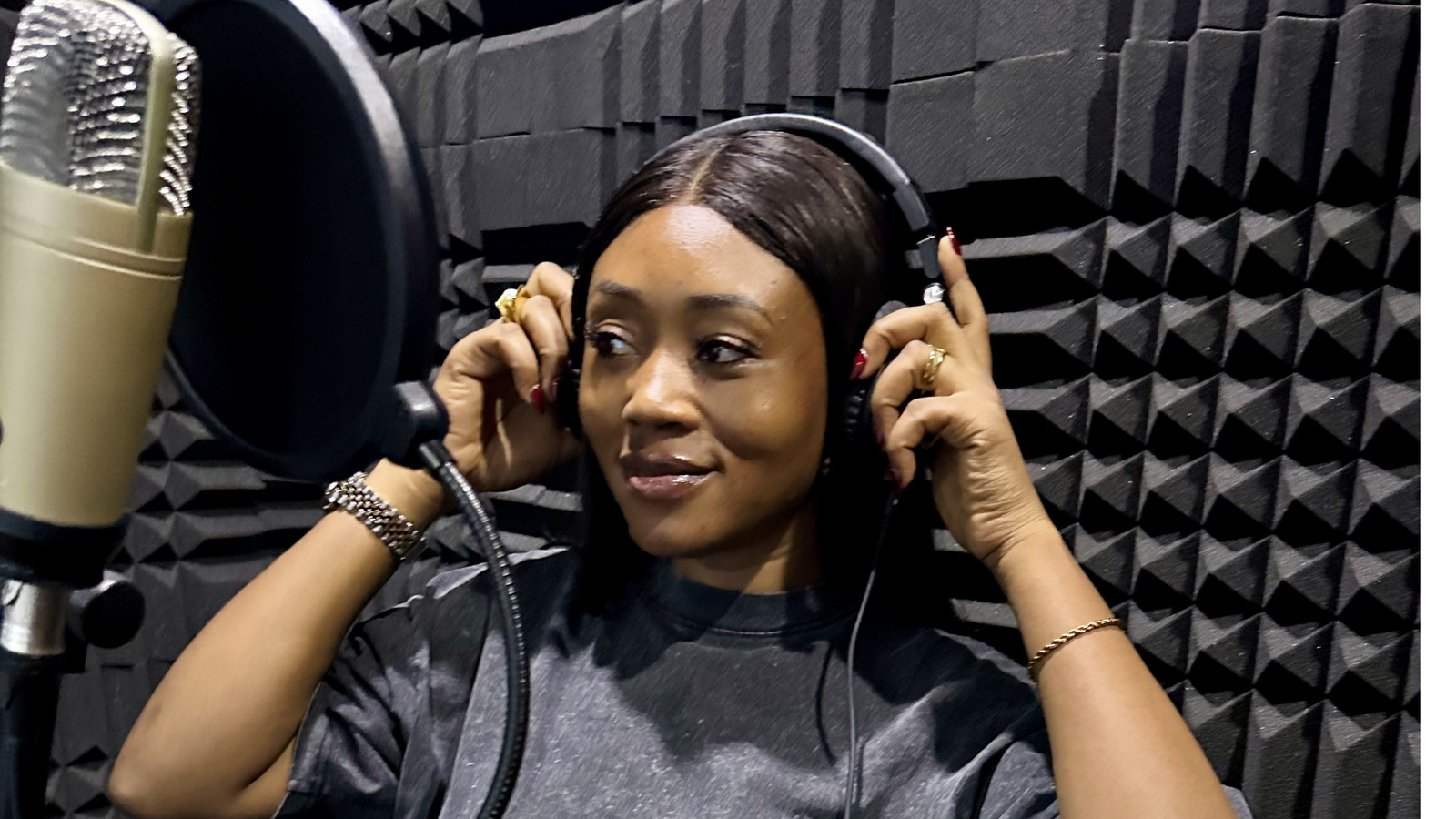
My home studio in Lagos is built on a Rode NT-1A and an Audio Technica AT2020 microphone running through a Focusrite Scarlett 2i2 interface and edited in Adobe Audition, with full remote session capability through Source Connect, ipDTL, and Zoom. That means a live-directed session with me feels as seamless as working with a studio in your own city, regardless of where you’re based. I’m bilingual in English and Yoruba, and beyond performing, I coach other voiceover artists through my F.W.R. Framework (Be easy to Find, Work With and Remember).
If your campaign is speaking to African audiences, your voice should sound like it belongs there. Authenticity isn’t just about getting the accent right. It’s about building trust, respecting culture, and creating work that truly connects. If you’re looking for an award-winning African voiceover artist who combines cultural authenticity with global production standards, I’d love to hear about your project.
Want posts like this in your inbox regularly? Subscribe to my Newsletter